Ask any film lover to close their eyes and picture their favourite movie moment, and you will almost certainly see something shift in their face. The jaw drops slightly. The eyes go distant. Whatever it is — a line of dialogue, a shot of light across a face, a single frame that reframed everything — these moments live in us long after the credits have rolled. Now, fans across the internet have been ranking the greatest of all time, and the results are as emotional as the films themselves.
Why Do Certain Movie Moments Stay With Us?
There is genuine science behind why films lodge so deeply in our memories. Psychologists describe what they call the peak-end rule: we remember experiences not as a whole, but by their most intense peaks and their final moments. Cinema weaponises this constantly. A great film builds its audience up, releases them at a moment of maximum emotional charge, and then plants a flag. That flag stays planted for decades. The moments that fans keep returning to are almost always the ones that hit that peak with absolute precision.
The Shower Scene That Changed Cinema Forever
Alfred Hitchcock’s Psycho did something extraordinary in 1960: it killed its main character forty minutes into the film. The shower scene at the Bates Motel, lasting less than a minute on screen but composed of over seventy cuts, was unlike anything audiences had encountered. People reportedly fainted. Cinemas had to post guards. It redefined what film was allowed to do to its audience. Nearly seventy years later, it still ranks at the top of almost every list. Hitchcock did not just direct a scene — he changed what cinema meant.
A 1980s horror movie once ranked the greatest ever is still terrifying audiences decades later, thanks to its paranoia, tension, and unforgettable scenes. https://t.co/epW6gKBgoz
— Men's Journal (@MensJournal) March 22, 2026
‘Here’s Looking at You, Kid’ — And Other Lines We Never Forgot
Casablanca is seventy years old and its dialogue still sounds like it was written yesterday. Humphrey Bogart and Ingrid Bergman traded lines that have since become shorthand for a certain kind of heartbreak — the kind that is noble and unspeakable at the same time. But Casablanca is far from alone. Dirty Harry asking whether a punk felt lucky. Forrest Gump explaining life and chocolates. Jack Nicholson insisting you cannot handle the truth. These lines travel beyond their films and into everyday language because they carry within them something essential about human nature.
When Darth Vader Said Those Four Words
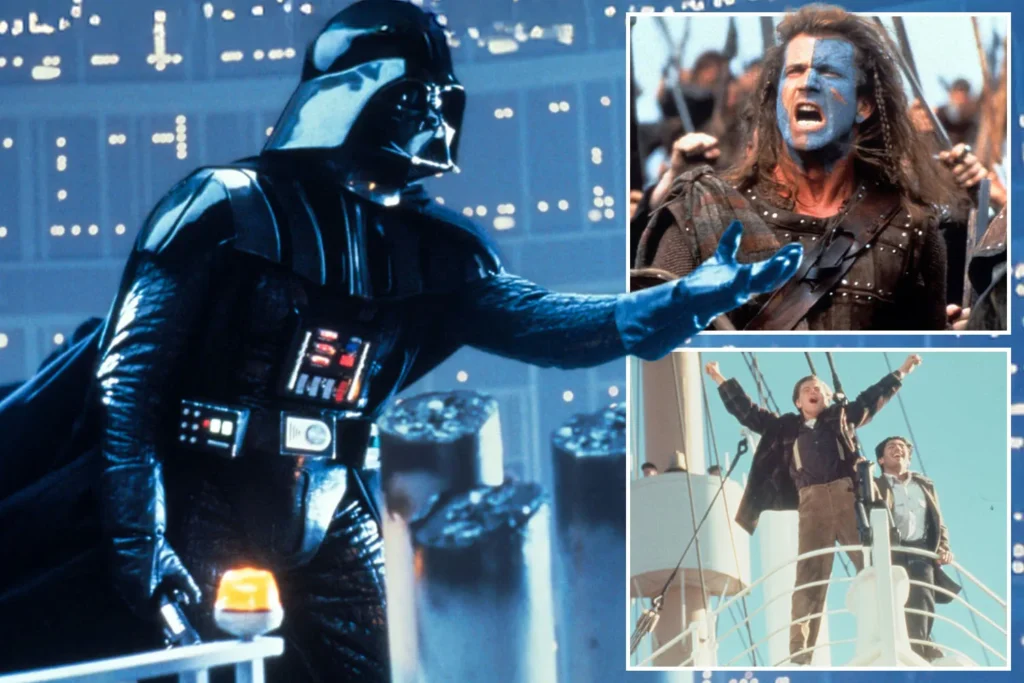
The Empire Strikes Back delivered one of the most devastating plot twists in cinema history, and it came in four words. When Darth Vader tells Luke Skywalker that he is his father, the audience’s understanding of everything that had come before collapsed instantly. It was not just a shocking reveal — it was a complete recontextualisation of the entire story. Fans who watched it in 1980 describe the silence in the cinema as the credits rolled. Nobody knew what to say. Many still argue it has never been topped in terms of pure cinematic gut-punch.
The Lion King Moment That Broke a Generation
Mufasa’s death in The Lion King (1994) remains one of the most emotionally devastating moments in children’s cinema — and in cinema full stop. Disney had always been willing to lean into darkness, but this was different. The long, quiet pan across the gorge after the stampede. Simba nudging his father’s paw. The music dropping away. Generations of children who grew up with this film carry it with them as adults, and it regularly appears in surveys about the moments that made people cry in public for the first time. There is no recovery from that scene. You simply sit in it.
Hey, ‘80s Horror fans! What are your favorite movie moments, kills, scenes, special effects, and more from the '80s? @80shorrordoc is looking to rank the best of ‘80s Horror leading up to In Search of Darkness: Part II on sale in October!
#80s #Horror #movies #iconic pic.twitter.com/t65GWJVY2w— Slash ‘N Cast (@SlashNCast) August 21, 2020
Romance, Rain, and That Notebook Scene
The rain-soaked confession scene from The Notebook (2004) could so easily have been ridiculous — two people screaming at each other in a thunderstorm while Ryan Gosling asks what she wants. Instead, it became the defining romantic scene of a generation. What makes it work is not the drama but the frustration underneath it: two people who clearly belong together but have spent years pulling in opposite directions. When it finally resolves, the exhale from audiences is almost audible. That scene has been parodied hundreds of times, which is proof that something in it hit a nerve so deep the culture had no choice but to keep processing it.
The Marvel Moment That Made Cinemas Explode
Avengers: Endgame (2019) ended with a sequence that Marvel had been building toward for more than a decade, and when all the disappeared heroes stepped through the portals during the final battle, cinema audiences lost their minds. The cheer that greeted Captain America catching Thor’s hammer, or Tony Stark’s final act, was reportedly audible from outside the buildings. People who were there describe the collective emotional experience of a packed cinema as unlike anything else in modern entertainment. It is the rare moment where you were not just watching a film — you were part of a shared, real-time cultural event.
Modern Classics Already Earning Their Place
It does not take decades for a scene to claim its place in the canon. The opening sequence of Up (2009), in which an entire love story is told in under four minutes with almost no dialogue, regularly tops lists of the most moving moments in cinema history — and the film is not even twenty years old. More recently, Everything Everywhere All at Once and Oppenheimer both produced scenes that audiences immediately recognised as something they would be talking about for the rest of their lives. The great moment does not need time to announce itself. You know it when it happens.
What Fans Are Saying Online
The debate is louder than ever on social media, where cinema fans argue passionately about what belongs on any definitive list. Some champion quiet, human moments over spectacle — the final scene of Lost in Translation, a whispered goodbye barely caught on camera. Others maintain that size and scale are essential, that the truly iconic moment needs an audience screaming together to fully exist. Both camps have a point. The beauty of this argument is that it has no correct answer, only deeply felt ones. Cinema is the art form that most effectively makes its audience forget they are watching something that was made.
What makes a movie moment iconic is not the budget behind it or the star power in front of the camera. It is the fraction of a second when a film reaches through the screen and grabs something in you. The best of these moments do not belong to their films anymore — they belong to all of us, filed away in a part of our memory that does not fade. Fans will keep ranking them, arguing about them, and rewatching them for as long as cinema exists. That is exactly how it should be.

Written by
Elle Diaz
Elle Diaz is a freelance journalist and fitness model based in the UK. With a background in health, wellness, and popular culture, she covers the stories people are actually talking about — from viral trends and celebrity news to science, lifestyle, and human interest. Elle brings a sharp, relatable voice to every piece she writes.
📷 Follow on Instagram