
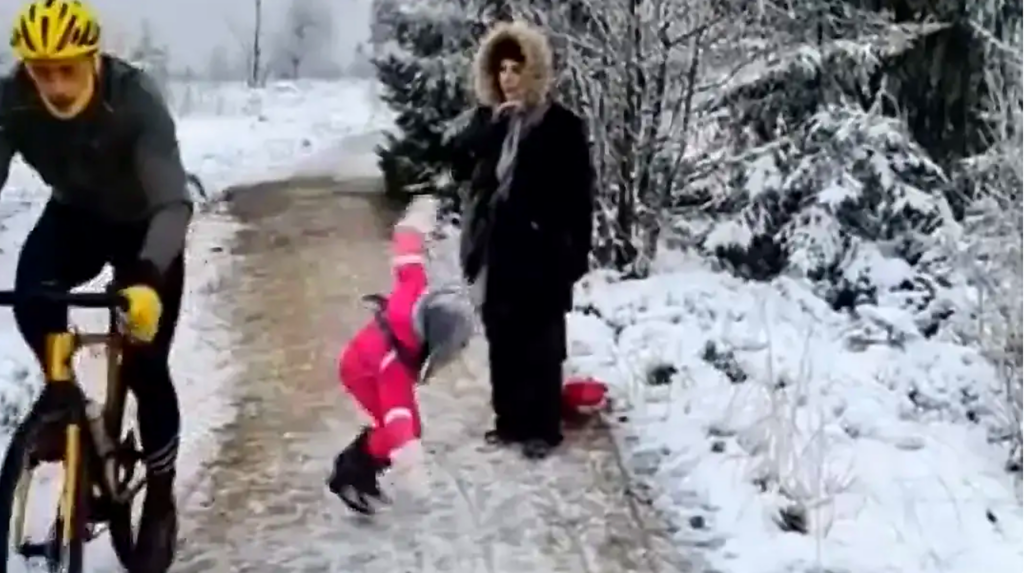
The clip was short, the outcome was not. A father filmed a collision between his young daughter and a cyclist and posted the footage online. What followed was not just the viral attention that typically greets such videos, but a court case that the father ultimately won. The story attracted substantial interest partly because it demonstrated that bystander footage can have legal as well as social consequences, and partly because it touched on a long-running dispute about cyclists and pedestrian spaces.
What the Footage Showed
The video captured the moment a cyclist struck the daughter while she was in a pedestrian area. The clip was clear enough to identify the cyclist and to show the nature of the impact. The father had been recording nearby when the incident occurred and shared the footage publicly after what he described as an unsatisfactory response from the cyclist immediately afterward. The video gained significant traction, drawing both support for the family and wider discussion about the use of cycles in pedestrian spaces.
How the Court Case Began
The father pursued legal action rather than simply allowing the viral moment to stand as its own form of accountability. The grounds for the case related to the manner in which the cyclist had been operating in an area where pedestrians had clear right of way. The footage formed a central piece of evidence, providing visual documentation that would otherwise have depended entirely on witness testimony. Courts have increasingly accepted such material as admissible and reliable in civil proceedings, and this case was no exception.
The Role of Social Media
What You Need To Know
The decision to post the footage publicly had consequences that cut in two directions. It generated the public pressure and identification that made the cyclist aware the incident had been documented. It also raised questions about whether sharing footage before any legal proceedings could have complicated matters. In practice the footage served the father’s case well, though legal experts have noted that public sharing of evidence can sometimes create complications around privacy and due process when proceedings follow.
A dad filmed a snowy walk with his daughter, a cyclist knocked her down, the video went viral, and after a big court fight the dad finally won the case ❄️
📍Belgium
— Tansu Yegen (@TansuYegen) March 8, 2026
What the Verdict Meant
The father winning the case meant that the court accepted his account of events and found the cyclist liable for what had occurred. What people focused on was the principle: that a pedestrian — in this case a child — struck by a cyclist in a space where cyclists should have exercised far greater care had pursued the matter through official channels and succeeded. That outcome resonated with many people who have had similar experiences without any such recourse available to them.
Cyclist and Pedestrian Space Disputes
The case arrived in the context of a wider and often heated debate about how shared and pedestrian spaces are used across the UK. Urban cycling has grown considerably in recent years, bringing benefits in terms of reduced traffic but also creating friction in spaces not designed for high-speed cycling. Incidents involving cyclists and pedestrians generate strong reactions on both sides, with cyclists pointing to the dangers of road traffic and pedestrians pointing to the risks posed by bikes moving at speed through their spaces.
The Power of Video Evidence
Phone cameras and dashcams have changed the evidentiary landscape in everyday disputes. Incidents that would previously have come down to one person’s word against another’s can now be reviewed on video. This has had significant effects in cases involving traffic incidents, public order matters, and disputes between members of the public. The cycling case is one example of a broader pattern in which individuals are using footage they have captured to pursue legal remedies that would not have been viable in an earlier era.
Reactions From the Cycling Community
Why This Matters
Responses from cycling advocates were mixed. Some acknowledged that cyclists who behave carelessly in pedestrian areas damage the reputation of cycling as a whole and that the outcome in this case was a consequence of specific bad behaviour rather than a broader indictment of cycling. Others argued that the viral framing of the story was disproportionate. The father was reported to be satisfied with the result and not interested in extending the dispute beyond the legal conclusion that had been reached.
What Parents Took From the Story
For many parents the story resonated because it reflected a situation they could imagine facing themselves. Children are frequent users of pedestrian spaces and are more vulnerable than adults in any collision. The fact that a father had pursued the matter legally, armed with footage, and won gave a sense of agency to other parents. The message was that documenting incidents and pursuing appropriate remedies is possible, even in cases that might seem too minor or too complicated for formal legal proceedings.
Implications for Future Cases
The Bottom Line
Legal commentators noted that the outcome could encourage others in similar situations to consider their options more carefully. Small claims and civil courts have relatively accessible processes for individuals, and video evidence can make cases that would otherwise be legally complex considerably more straightforward. The cyclist involved faced consequences that went well beyond the initial viral moment, which may itself act as a deterrent in some situations involving pedestrian spaces and cycling conduct.
The story of a father filming a collision and eventually winning a court case over it is, on one level, a simple account of someone pursuing justice with the evidence available to them. On another level, it reflects a set of shifts in how everyday disputes are documented, shared, and resolved. Viral footage is no longer just a tool for public attention — it can be the foundation of a successful legal case. And in spaces where pedestrians and cyclists continue to share contested ground, that knowledge changes the stakes of every interaction.

Written by
Elle Diaz
Elle Diaz is a freelance journalist and fitness model based in the UK. With a background in health, wellness, and popular culture, she covers the stories people are actually talking about — from viral trends and celebrity news to science, lifestyle, and human interest. Elle brings a sharp, relatable voice to every piece she writes.
📷 Follow on Instagram