
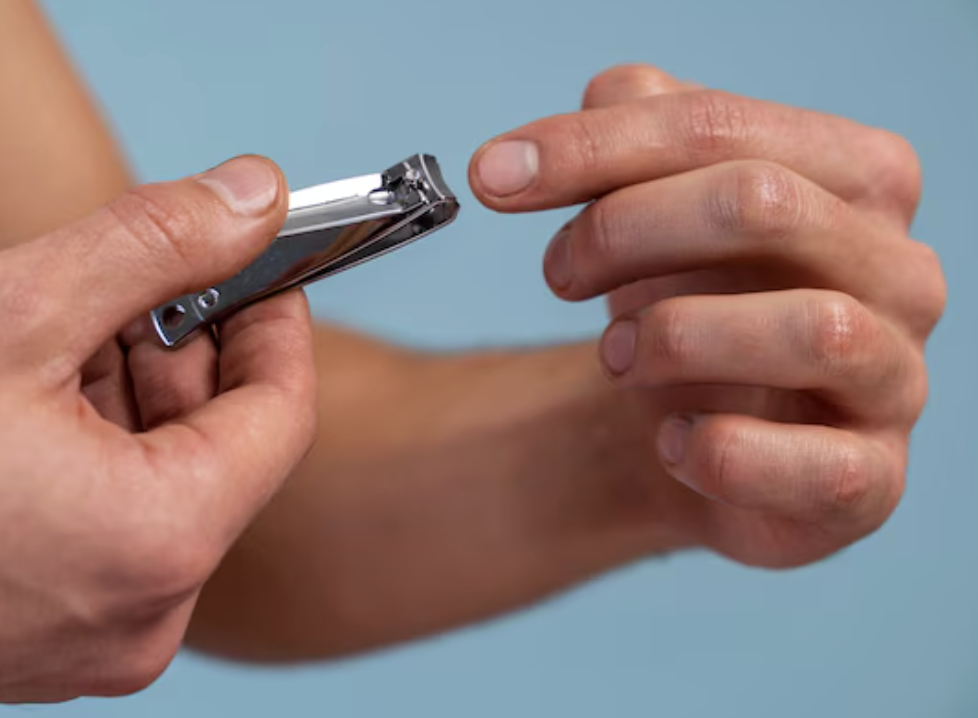
That hole in the nail clippers serves a purpose! https://t.co/mnU1vHUefS
— Reader's Digest (@readersdigest) March 24, 2026
There is a category of viral content that does very well online: the revelation that an ordinary object has a feature or purpose that almost nobody knew about. The tiny hole on nail clippers is the latest item to enjoy this treatment. A post pointing out the hole and explaining its function spread quickly, generating the familiar mixture of genuine surprise, mild disbelief, and retrospective embarrassment from people who had owned nail clippers for decades without once wondering what it was for. It turns out the answer is both practical and slightly surprising.
What the Hole Actually Does
The small hole found on the body of many nail clippers — typically in the lever or the upper plate of the device — serves as a point of attachment. It allows the clipper to be attached to a keyring, a lanyard, or a small hook, keeping it accessible without taking up drawer space or getting lost in a bag. Some nail clipper designs also use the hole to attach a small nail file. In travel or compact designs, this attachment function is particularly useful, allowing the clipper to be kept with other small items rather than stored loose.

Why Nobody Knew This
The reason most people reach adulthood without knowing this is that the hole’s function is passive: it does nothing if you simply put the clipper in a drawer and use it occasionally. There is no label, no instruction, and no obvious clue beyond the hole itself. People who grew up using nail clippers kept loose in a bathroom cabinet had no occasion to discover the attachment function. It is the kind of design feature that only reveals itself when you use the product the way its designers envisioned, which is not how most people use them.
The History of the Nail Clipper
What You Need To Know
The nail clipper as a standardised tool dates to the late nineteenth century, with various patents for lever-action clipping devices appearing in the 1870s and 1880s. The design settled into roughly its modern form in the early twentieth century and has not changed substantially since. The attachment hole has been part of many designs throughout this history, which means millions of people across generations have used nail clippers without discovering its purpose. That longevity is part of what makes the reveal satisfying: it feels like uncovering something hiding in plain sight for a very long time.
Other Everyday Objects With Hidden Features
The nail clipper hole belongs to a well-established genre of viral content about overlooked product features. The hole in a pasta spoon measures a single portion of spaghetti. The small disc under the cap of a pen acts as a choking hazard prevention mechanism. The tiny pocket inside jeans pockets was originally designed for pocket watches. The coloured squares on toothpaste tubes do not indicate ingredients as a common myth suggests. Each of these facts generates the same response when shared: a mixture of amazement and the feeling that one should have already known this.
Why These Reveals Spread So Fast
Hidden feature content performs well on social media for several reasons. It requires no prior knowledge to appreciate, generates an immediate and shareable reaction, and invites participation through comments from people sharing whether they knew or did not know. The everyday familiarity of the objects involved means almost everyone has relevant personal experience to bring to the conversation. And the slight self-deprecating embarrassment of not having noticed something so obvious for so long is a genuinely relatable feeling that people enjoy expressing publicly.
Design Intentions Versus Actual Use
The nail clipper hole is also a useful illustration of the gap that often exists between how designers intend a product to be used and how it is actually used in practice. Industrial designers build features into everyday objects based on assumptions about usage contexts that may not match how the product ends up being used at home. When those features go unnoticed, it is not necessarily a failure of design — the product still works for its primary purpose. But it does suggest that the communication between designer and user often relies on context that does not always translate.
What People Are Doing With the Information
Why This Matters
The response to the original post followed a pattern familiar from similar reveals. Many people immediately checked their own nail clippers and confirmed the hole’s presence with a slightly startled feeling. Some went looking for keyrings to attach them to. Others shared the information with family members who also had no idea. A subset of people pointed out that they had always known this, which is almost certainly true for a proportion of them and considerably less certain for the rest. The overall effect was a brief collective recalibration of a piece of knowledge most people had never acquired.
The Broader Point About Hidden Design
These moments of product revelation occasionally lead to more sustained thinking about how much intentional design exists in everyday objects that simply goes unnoticed. Cars, kitchenware, clothing, and stationery all contain features that most users never discover, not because the features are secret but because they only become apparent in specific usage contexts or with specific awareness. Designers tend to find these reveals amusing; they built those features knowing they would be used by some and ignored by most, and the occasional viral moment confirms both outcomes simultaneously.
The Satisfying Nature of Learning Something Small
The Bottom Line
There is something specifically pleasurable about learning a small, concrete fact about an object you have used your entire life. It costs nothing, changes nothing significant, and yet produces a genuine sense of discovery. The world has not changed, but your understanding of one tiny piece of it has. This is, in a small way, why the hidden feature genre keeps working. It offers the feeling of discovery without the effort discovery usually requires. The nail clipper hole is a trivial piece of knowledge, and yet knowing it feels, for a moment, genuinely satisfying.
The tiny hole on your nail clipper was always there, waiting to be noticed. It was designed with a purpose, built into millions of units across generations of production, and almost universally ignored. Learning what it is for does not change how you use nail clippers — most people will continue storing them in a drawer regardless — but it does change, very slightly, how you see an object you thought you already fully understood. That small shift in perception is exactly what makes these reveals travel so reliably. We all have objects we thought we knew completely.

Written by
Elle Diaz
Elle Diaz is a freelance journalist and fitness model based in the UK. With a background in health, wellness, and popular culture, she covers the stories people are actually talking about — from viral trends and celebrity news to science, lifestyle, and human interest. Elle brings a sharp, relatable voice to every piece she writes.
📷 Follow on Instagram