
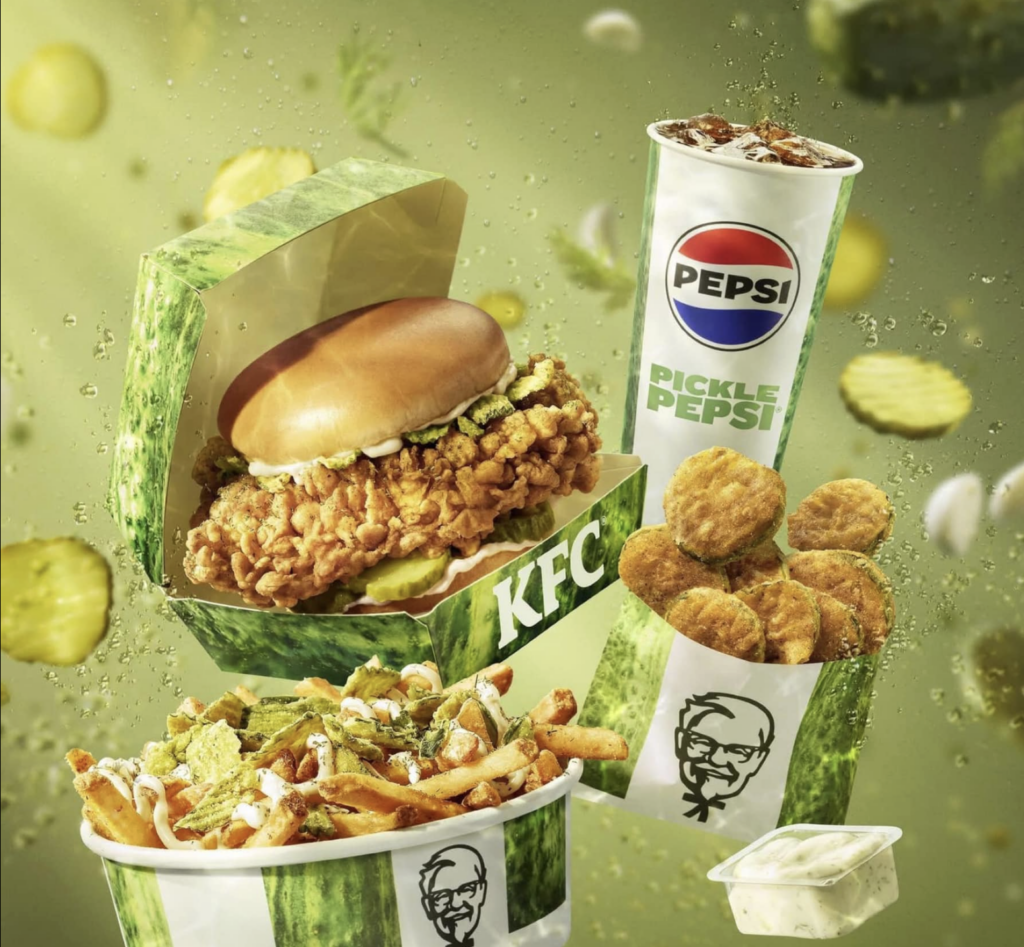
The KFC Pickle Puffer is getting millions of views on X and it’s an actual piece of merchandise you can buy. “– a transparent puffer stuffed with real pickles and brine, drinkable via built-in straw. 🥒🧥 Born from a viral AI video, KFC made it real to hype new pickle menu
— idrawcooks (@idrawcooksfbs) Mar 2026
Fast food chains change their recipes all the time. Most of the time, nobody notices. But when KFC quietly altered something about its signature pickles — the briny discs nestled inside its iconic burgers — the reaction was anything but quiet. Within days, social media was flooded with complaints, blind taste tests filmed in car parks, and passionate declarations from loyal customers who insisted the new version simply was not the same. What followed was one of those peculiarly modern food controversies: enormous in scale, heated in tone, and centred entirely on a small slice of pickled cucumber.
The Pickle That Divided the Nation
It started, as so many food controversies do, with a single post. A customer shared a photo of their KFC burger, zoomed in on the pickle, and noted that something seemed different about the texture, the brine level, and the overall flavour profile. Within hours, hundreds of replies confirmed that others had noticed the same thing. The original post was shared thousands of times across Twitter, TikTok, and Reddit, and before long dedicated threads had sprung up where fans were comparing notes, debating the merits of the old versus the new, and calling on KFC to explain itself. The pickle had become the most talked-about condiment in fast food.
What KFC Actually Changed
The details of what precisely was altered remain somewhat murky, partly because KFC has not issued a detailed public statement about any recipe changes, and partly because customers are relying on sensory memory rather than laboratory analysis. The most consistent complaints centre on the sourness of the pickle — many regulars feel the new version is less tangy than the original — along with changes to the thickness of the slice and the crunch when bitten. Some customers have suggested the supplier was changed; others believe the brining process was modified. Without official confirmation, the true nature of the change remains a matter of passionate but unverifiable debate.
Key Details
Why Pickles Matter More Than You Think
To anyone outside the world of fast food devotion, the intensity of the reaction might seem baffling. But food scientists and flavour researchers would argue that the pickle is doing far more work in a fast food burger than its modest size suggests. The acidity of a good pickle cuts through the richness of the fried chicken and the fat of the mayonnaise, providing a necessary counterpoint that makes the whole thing taste more balanced and satisfying. Remove or diminish that acidic note and the entire flavour architecture of the burger shifts. What customers are reacting to may not be pickle fussiness — it may be a genuinely meaningful change to something that made the product work.
The Power of Sensory Memory in Fast Food
There is another dimension to this that goes beyond flavour chemistry. Food is one of the most powerful triggers of memory that we have. The taste of a KFC burger is not just a flavour — it is associated, for millions of regular customers, with specific times, places, and emotions. Childhood treats, late-night comfort food, celebrations, and road trips are all encoded alongside the sensory profile of the food eaten during them. When that sensory profile changes, however slightly, the emotional resonance changes too. Customers who insist the pickle “just tastes wrong now” may be partially reacting to a very human experience: the unsettling feeling that something familiar has been taken away.
KFC’s Response to the Backlash
KFC has, at the time of writing, responded with a combination of light-hearted social media engagement and strategic silence on the specifics. A few tongue-in-cheek posts acknowledging the debate without confirming or denying any changes have done little to satisfy the customers demanding straight answers. This is a fairly standard crisis communications approach for a major food brand: acknowledge the conversation, appear engaged and human, but avoid saying anything that could be construed as an admission that the product has worsened. Whether this will be enough to defuse the controversy or whether it will simply extend it remains to be seen.
What You Need to Know
A Brief History of Fast Food Recipe Scandals
The pickle incident joins a long and entertaining history of fast food recipe controversies. McDonald’s has faced regular outcry over changes to its burger patties, its fries, and famously its milkshake recipes. Subway’s bread composition became the subject of an international legal ruling. Cadbury’s chocolate recipe change in 2009 sparked a level of public outrage that felt disproportionate to the product but was deeply genuine in its emotional intensity. What these incidents have in common is that they reveal how much emotional investment people have placed in the consistency of these products — and how quickly that investment can turn to anger when the consistency is disrupted.
The Psychology of Brand Loyalty and Taste
Brand loyalty in the fast food sector is built on a specific promise: that you will get the same thing every time, wherever you are and whenever you visit. That reliability is the entire proposition. It is what distinguishes a KFC from a local fried chicken shop, which might be better on any given day but which cannot guarantee consistency. When that promise appears to be broken — when the pickle tastes different — loyal customers feel a form of betrayal that is out of proportion to the literal significance of the change but entirely understandable given what they believed they were being offered. Trust in brands is fragile, and small things can crack it.
Are Pickles Getting Worse Everywhere?
Some commentators have used the KFC controversy as a springboard for a broader argument: that the quality of pickles across the fast food industry has declined as brands have sought to cut costs and simplify supply chains. Whether or not this is true is difficult to establish objectively, but it is certainly the case that the cost of good cucumber varieties, the time required for proper brining, and the logistical complexity of maintaining a quality pickle supply at scale all create pressure to cut corners. The customers who claim to taste the difference may be detecting real changes — not just in this one product but in an industry-wide drift away from the kind of quality that originally made these brands popular.
The Impact
What Happens Next for KFC
The most likely outcome is that the controversy fades gradually, as most food controversies do. People keep going to KFC because it is convenient and familiar, and over time their sensory memory adjusts to the new version of the pickle until it becomes the new normal. But there is a less comfortable possibility: that enough regular customers genuinely notice and dislike the change that footfall drops, even slightly, in the months ahead. Fast food chains monitor these metrics obsessively, and a significant enough signal in the data could prompt a quiet reversal of whatever was changed — returned to the original formulation with no announcement and no admission that anything had ever changed at all.
The great pickle debate will almost certainly be forgotten within a few weeks, replaced by whatever the next food controversy turns out to be. But the passion it has generated says something genuine about what people value in the brands they trust. Fast food is not supposed to be transcendent cooking — it is supposed to be reliable, consistent, and exactly what you expected. The pickle is, in that sense, not a small thing at all. It is a symbol of a promise that millions of people feel they were implicitly made, and are now not entirely sure is being kept.
Moving Forward

Written by
Elle Diaz
Elle Diaz is a freelance journalist and fitness model based in the UK. With a background in health, wellness, and popular culture, she covers the stories people are actually talking about — from viral trends and celebrity news to science, lifestyle, and human interest. Elle brings a sharp, relatable voice to every piece she writes.
📷 Follow on Instagram