
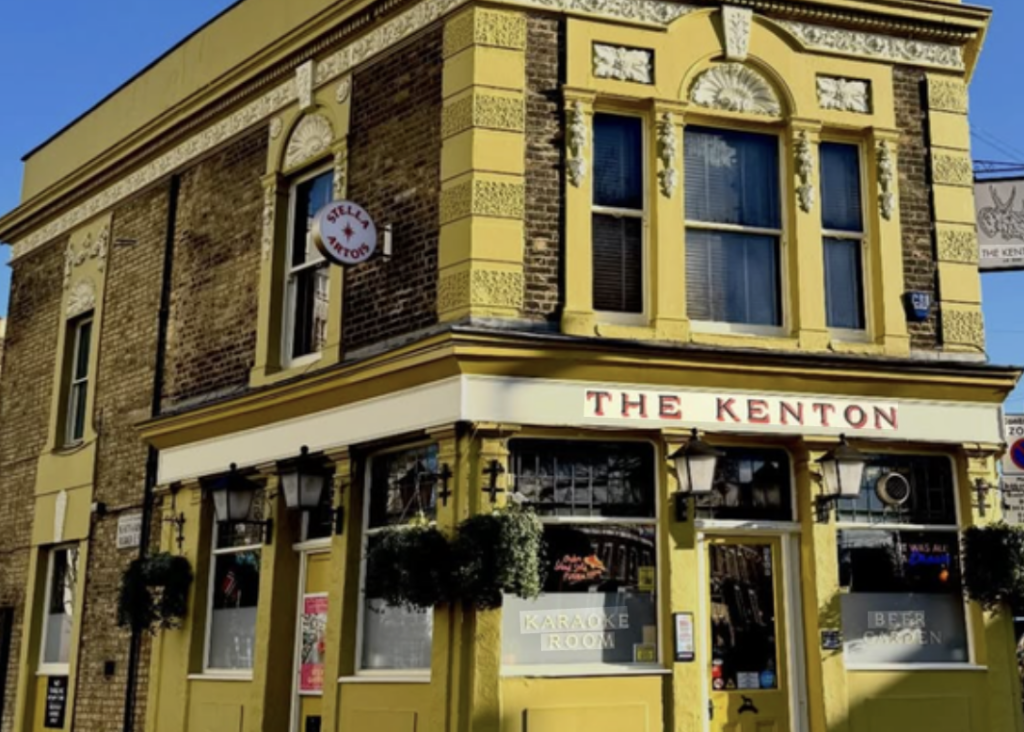
"NO KIDS ALLOWED!"
PUB LANDLORD BANS ALL CHILDREN AFTER ENTITLED PARENTS TURN BOOZER INTO A CRÈCHE!
Egil Johansen, boss of The Kenton Arms in Hackney, has made his popular East London pub completely adults-only after years of chaos.
Key Details
He blames “entitled” parents who let their… pic.twitter.com/o5G5934ioT
— Grifty (@TheGriftReport) March 22, 2026
It takes a particular kind of confidence to post a sign on your pub door that reads “No children allowed” — the sort of confidence that invites an immediate, passionate, and fairly predictable internet argument. That is exactly what happened when a British pub announced a strict no-children policy, stating that the establishment would no longer permit anyone under 18 inside at any time, including early evenings and Sunday lunchtimes when families have traditionally been welcomed. Within hours, the story had been shared tens of thousands of times, and the comments sections of every outlet that covered it had divided neatly into two camps: those who thought the pub was entirely within its rights, and those who found the policy discriminatory, impractical, or simply unkind.
What You Need to Know
What the Pub Actually Said
The announcement came via the pub’s social media accounts, in a post that was notably direct. The owners stated that the decision had been driven by complaints from regular customers about noise levels and disruption during evening hours, and that after considerable deliberation they had decided the simplest solution was a blanket ban rather than a case-by-case approach. They acknowledged that the decision would disappoint some customers and said they respected that families might choose to take their custom elsewhere. The matter-of-fact tone of the statement — neither apologetic nor aggressive — somehow managed to inflame both sides of the debate simultaneously, which is quite an achievement.
The Case for Child-Free Spaces
The supporters of the ban were swift and vocal. Many argued that adults have a legitimate right to spaces where they can socialise without the presence of children, and that the erosion of such spaces over recent decades has been gradual and largely unacknowledged. They pointed out that parents have access to a wide range of family-friendly venues and that a single pub choosing a different model is a reasonable exercise of a private business’s freedom to define its own atmosphere and clientele. Several commentators drew parallels with other age-restricted spaces — nightclubs, adult cinemas, casinos — where the age restriction is accepted without controversy. The pub, they argued, was simply being honest about what kind of establishment it wanted to be.
The Case Against the Ban
The critics were equally passionate. Parents pointed out that the British pub has historically been a communal space — one that served families as well as individuals, and that the idea of a welcoming local where children could accompany their parents for a Sunday lunch is a genuine part of the culture that is worth preserving. Others raised questions about the practical implications: what about parents who want to meet friends in the evening? What about older teenagers who might be accompanying family members? Some critics argued that the problem being solved — excessive noise from children — was a management problem that did not require a blanket exclusion policy. Better policing of behaviour, they suggested, would achieve the same outcome without alienating families entirely.
The Impact
Is It Actually Legal?
The legal position in the United Kingdom is relatively clear: there is no law requiring pubs to admit children, and licensees have significant discretion over who they allow on their premises. Under the Licensing Act 2003, children can be present in licensed premises at the discretion of the licence holder, but there is no obligation to permit them. The only legal requirement is that children under 16 must not be present in a bar area after certain hours unless the premises has a specific family area licence. So the pub’s decision is entirely within the law. Whether it is wise, or kind, or good business practice is a separate question from whether it is permitted.
The Reaction From Parents
Among parents, the reaction ranged from resigned understanding to genuine anger. Those in the resigned camp tended to acknowledge that the pub was within its rights, even if they personally found the policy unwelcoming. Those who were angry focused on what they saw as a broader cultural message: that children — and by extension families — are increasingly unwanted in public spaces. For parents of young children, who already navigate a world with limited spaces that are genuinely welcoming to them, the symbolism of a child-free pub felt like one more door closing. Several noted that the pub in question had not previously been particularly family-oriented anyway, which made the formal announcement feel somewhat performative.
What the Regulars Think
Among the pub’s existing regular customers, opinion was also split. Some were relieved, describing previous visits disrupted by loud or poorly supervised children as a reason they had stopped coming on certain nights. Others were surprised, having not realised there was a significant problem to solve. A handful said they would stop visiting in solidarity with their friends who had children. The range of reactions from people who actually knew the pub suggests that the decision was not as simple as “all regulars wanted this” — it was a management call made on behalf of a portion of the customer base, as most management decisions are, with the expectation that the benefits would outweigh the losses.
Moving Forward
The Broader Trend of Child-Free Spaces
The pub’s policy is part of a broader, if patchy, trend towards designated child-free spaces in hospitality and beyond. Several airlines have experimented with child-free sections. Certain restaurants now explicitly market themselves as adult-only. Holiday resorts and hotels catering specifically to adults have existed for decades and continue to grow in popularity. The demand for these spaces reflects genuine social diversity: not everyone shares the same preferences, and a hospitality sector that caters only to families — or only to adults — serves a smaller portion of the population than one that offers both. The controversy around any specific implementation tends to be louder than the underlying logic would suggest it deserves.
How Similar Debates Have Played Out Before
This is far from the first time a British pub has sparked national debate by imposing an unusual policy. Pubs have generated controversy by banning laptops, banning mobile phones, banning large groups, and banning certain sports broadcasts. Each time, the pattern is similar: initial outrage, a period of intense social media debate, a gradual recognition that the pub has the right to set its own rules, and eventual return to normality. The pubs that make these decisions are rarely trying to be controversial — they are usually trying to solve a specific problem that their customer base has raised. The internet turns the solution into a national conversation, which is both more attention than the decision warrants and, occasionally, useful publicity.
What Happens to the Pub Now
The immediate effect of the announcement has been significant footfall from curious visitors wanting to see what all the fuss is about. Whether this translates into sustained custom depends on whether the new atmosphere — quieter, more adult, free from the particular energy that children bring — is what the remaining regulars actually wanted. Pubs that have made similar decisions in the past have generally found one of two outcomes: either the atmosphere improves sufficiently that a loyal adult clientele establishes itself and the pub thrives, or the customer base turns out to have been more family-dependent than anyone realised, and the business suffers. Which of those outcomes this particular pub experiences will be determined over the next few months.
The great pub debate will not be resolved by any single establishment’s policy, and it should not be. The diversity of British pub culture — from the sports bar to the gastropub, from the quiet country local to the bustling city tavern — is one of its genuine strengths. Room exists for child-free spaces and for family-friendly ones. The argument about which should predominate says more about the preferences of whoever is arguing than it does about what is objectively right. What can be said with confidence is that the pub in question has made its choice, it is within its rights, and the internet will have an entirely new argument to have next week.

Written by
Elle Diaz
Elle Diaz is a freelance journalist and fitness model based in the UK. With a background in health, wellness, and popular culture, she covers the stories people are actually talking about — from viral trends and celebrity news to science, lifestyle, and human interest. Elle brings a sharp, relatable voice to every piece she writes.
📷 Follow on Instagram