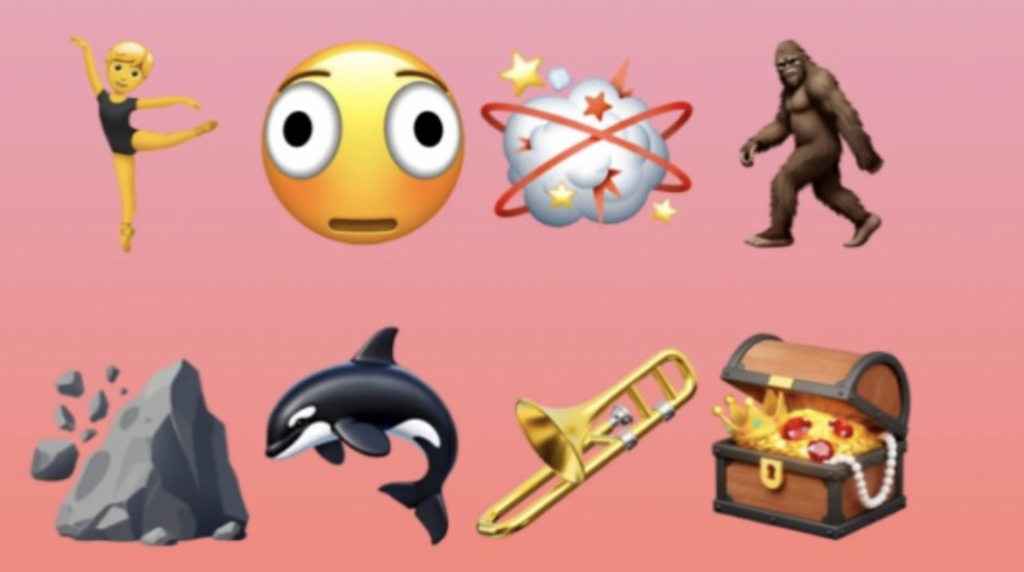
iOS 26.4 Beta 4 adds eight new emojis, including Distorted Face, Trombone, Hairy Creature, Treasure Chest, Fight Cloud, Orca, Ballet Dancer, and Landslide.
🧑🩰 pic.twitter.com/2aMR8GDtuR— Beta Profiles (@BetaProfiles) March 9, 2026
Apple emoji updates have developed a reliable pattern: they arrive, one of them immediately goes viral, and for a few days the entire internet uses almost nothing else. The latest batch of new emojis followed this pattern faithfully, with one addition in particular spreading across platforms within hours of the update being available. Whether this says more about the emoji itself or about the internet’s appetite for new expressive tools is a reasonable question, but the outcome was predictable and the reception was enthusiastic.
What the New Emojis Include
The latest Apple emoji release added a set of new characters covering a range of subjects from everyday objects to expressions and food items. Apple releases new emojis periodically following updates to the Unicode standard, which governs which characters are approved for inclusion across different platforms. The new additions were drawn from recently approved Unicode proposals and included both entirely new concepts and updates to existing characters. The full list covered a wide enough range to offer something interesting to most users who scrolled through it.
The One That Went Viral
Among the new additions, one emoji rapidly became the standout. Its appeal lay in how precisely it captured a facial expression or gesture that people had been trying to convey through existing emojis without ever finding quite the right fit. The best emoji additions tend to do this: they identify a gap between what people want to communicate and what was previously available, and they fill it cleanly. The viral one hit that sweet spot, and users immediately began incorporating it into messages, posts, and reactions where it clearly belonged.
Why Certain Emojis Go Viral
What You Need To Know
The virality of individual emojis is not random. Research into emoji usage has found that the most widely adopted additions tend to be those that serve a specific communicative function that nothing else captures quite as well. Ambiguous expressions perform particularly well because they can be applied across many different contexts and tones. The face that could mean anything, the gesture that sits between irony and sincerity, the symbol that works for celebration or commiseration — these are the ones that embed themselves in everyday digital communication and stay there.
How Apple Designs Emojis
Apple’s emoji design team works from approved Unicode characters but has considerable latitude in how those characters are visually interpreted. The same Unicode emoji can look quite different across Apple, Google, Samsung, and other platforms, and those differences matter for how the emoji is used and perceived. Apple’s design aesthetic tends toward high-detail rounded forms, and its interpretations often set the tone for how an emoji is popularly understood even when other platform versions exist. When Apple gets an emoji right, the effect ripples across the whole digital communication landscape.
The History of Emoji Updates
Emojis were introduced in Japan in the late 1990s and first adopted widely through smartphones in the 2010s. Since then the library has grown from a few hundred characters to several thousand, covering skin tone variations, gender options, professions, animals, foods, symbols, and a vast range of objects and expressions. Each update generates significant coverage because emojis have become a genuinely important part of how people communicate online. The ability to express nuance, humour, and emotion in a single character is something users take seriously even when the subject matter is playful.
Reactions Across Social Media
The reaction on social media followed familiar lines. Early adopters shared examples of how they were already using the new viral emoji. Meme pages incorporated it within hours. A subset of users complained that the design did not match their expectations or compared it unfavourably to a competitor’s version. Others debated the selection of emojis in the batch, arguing that certain long-requested additions had still not appeared. And a large majority simply updated their phones and started using the new additions without overthinking any of it.
Android and Cross-Platform Differences
Why This Matters
One recurring issue with emoji updates is the gap between platforms. Apple’s update applied to iOS devices, meaning Android users on Google’s platform would see a different version of the same emoji depending on their device. This creates occasional confusion when an emoji that looks one way on an iPhone appears differently on an Android phone, sometimes changing the intended meaning in the process. Emoji designers are aware of this and the Unicode Consortium’s documentation tries to narrow interpretive differences, but variation persists across the ecosystem.
Emojis as a Communication Tool
Linguists and communication researchers have studied emoji use extensively and found that they function differently from words in important ways. They carry tone and emotion that text struggles to convey, can soften direct statements, add irony, or completely shift the meaning of a sentence. As digital communication has become the primary way many people interact with friends and colleagues, the emoji library has become something close to a shared visual language. New additions to that language are genuinely significant, which is why each release attracts this level of attention.
What to Expect Next
The Bottom Line
The Unicode Consortium approves new emoji characters on a roughly annual basis, with major platforms following their own update schedules. Several characters are already in the pipeline for future approval, including additions that have been requested by users for years. The process from approval to widespread availability typically takes twelve to eighteen months as the major platforms design and roll out their own versions. For now, users have the latest batch to explore, and at least one of them has already firmly established itself in the daily vocabulary of digital expression.
Every new emoji release is, in miniature, a small cultural event. The debate about which ones were needed, which ones missed the mark, and which one will define how people communicate for the next few years plays out with genuine enthusiasm because emoji have become genuinely important. Apple’s latest update delivered the expected viral moment and a useful set of new expressive tools alongside it. The one that went viral will likely be everywhere for the foreseeable future, and that is probably exactly what its designers were hoping for when they created it.

Written by
Elle Diaz
Elle Diaz is a freelance journalist and fitness model based in the UK. With a background in health, wellness, and popular culture, she covers the stories people are actually talking about — from viral trends and celebrity news to science, lifestyle, and human interest. Elle brings a sharp, relatable voice to every piece she writes.
📷 Follow on Instagram