
Few British boxers of the modern era have combined the sheer thrilling qualities that Amir Khan brought to the sport: hand speed that left opponents and commentators speechless, chin controversies that made every fight feel like a ticking clock, and a willingness to take on the best in the world regardless of the risk. His career is a collection of spectacular moments — victories, defeats, and everything in between — that made him one of the most watchable fighters of his generation and a genuinely important figure in British and global boxing. Here are the five nights that defined the Amir Khan boxing legacy.
The Night That Started Everything: Athens 2004
Amir Khan was just seventeen years old when he walked out into the Athens Olympic arena as Britain’s flagbearer of boxing hope, and he proceeded to stun the sport by reaching the final of the lightweight category. He was beaten on points by the Cuban Mario Kindelan — a man who had never lost as an amateur and was approaching the end of one of the greatest amateur careers in boxing history. Khan’s silver medal, won with aggression, speed, and a maturity that belied his age, immediately announced him as a professional prospect of extraordinary potential. The British public fell for him that night in Greece, and the love affair largely endured what came after.
The WBA Title Win Over Marco Antonio Barrera
In September 2009, Khan defeated Mexican legend Marco Antonio Barrera by fifth-round technical knockout to claim the WBA light-welterweight title, confirming to a global audience that the Olympic prodigy had made the transition to world champion. Barrera was a multiple-weight world champion and certified great of the sport, and beating him was not merely a line on a record — it was a statement of legitimacy. Khan’s combination punching was devastating, his movement was fluid, and the victory arrived at the perfect moment in his development to maximum effect.
Key Details
EXCLUSIVE: Amir Khan explains why Tyson Fury doesn't need to fight Anthony Joshua https://t.co/rDF3IDP6EK
— talkSPORT (@talkSPORT) May 17, 2024
The Maidana Fight: Heart Over Everything
The December 2010 contest against Marcos Maidana is the fight that those who know boxing best cite when they want to explain what Amir Khan truly is. In the opening round, Khan was knocked down by a right hand and looked as though the night might end early. Instead, he got up and fought through nine more rounds of absolute carnage — trading shots, absorbing punishment, and returning fire — in a performance that showed a version of heart and courage that no training can manufacture. Khan won by majority decision. It remains arguably the defining statement of his entire career, even in defeat on so many other nights.
What You Need to Know
The First Loss: Breidis Prescott’s Shock KO
Before the Barrera win and the Maidana war, Khan suffered one of the most shocking upsets British boxing has witnessed. In September 2008, virtually unknown Colombian Breidis Prescott knocked Khan out in the first round with a single right hand that folded the young champion like a card. The defeat devastated Khan and the many who had invested so much hope in him. But what happened next was equally instructive: he went back to the drawing board, rebuilt under Freddie Roach, and returned to become world champion. The way he responded to Prescott said as much about him as any of his victories.

The Canelo Knockout: A Career Flashpoint
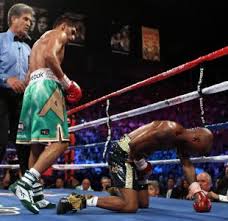
Khan’s willingness to test himself at the very highest level led him into a contract that most considered suicidal: a 155-pound catch-weight contest against Saul “Canelo” Alvarez in Las Vegas in May 2016. Khan was a natural light-welterweight fighting a man who had campaigned up to super-middleweight and dwarfed him physically. For the first five rounds, Khan’s speed made the contest genuinely compelling, outworking Canelo and putting him under pressure few fighters had managed. Then the single right hand arrived in round six, and Khan was knocked out cold. It was devastating — but the courage to take the fight at all has never been forgotten.
Official #CrawfordKhan fight tickets available NOW! – Use the link below with the code: KHAN – I’m stepping into the ring to fight for the World title, for my family, for you my fans, for my legacy, to entertain you… Now let’s FIGHT! 💥🥊 https://t.co/kluCTIvqga… pic.twitter.com/0WJOUMEZmA
The Impact
— Amir Khan (@amirkingkhan) February 12, 2019
The Danny Garcia Fights: Chin Controversy Revisited
Khan’s two encounters with Danny Garcia — a stoppage defeat in 2012 and a narrow points loss — crystallised the central debate of his career. His technical ability and hand speed remained elite, but his susceptibility to being stopped or staggered remained a persistent vulnerability that opponents and promoters were always aware of. Garcia was a good fighter rather than an all-time great, and Khan’s inability to convert his early dominance into wins against the American raised legitimate questions about whether his chin would ever allow him to fulfil the promise of his extraordinary talent.
The Kell Brook Rivalry and Final Chapter
One of British boxing’s most anticipated domestic contests finally arrived in February 2022, when Khan faced his long-time rival Kell Brook at Manchester Arena. The fight lived up to its billing: Khan dropped Brook in the first round, Brook came back strongly, and the match was stopped in round six in Brook’s favour following a significant right hand. It was a fight that both men had talked about for years and it delivered when it finally materialised. Khan announced his retirement shortly after. He left the sport with his reputation and dignity intact, even as fans debated what more he might have achieved with a more durable chin.
Moving Forward
What a career this man had 🙌 @amirkingkhan leaves behind an incredible boxing legacy 🥊 pic.twitter.com/ADf9UrZR7e
— Boxing on TNT Sports (@boxingontnt) May 13, 2022
What Amir Khan’s Legacy Actually Is
The tendency to judge Khan through the lens of what he did not achieve — world titles at multiple weights, the Mayweather fight that never materialised — risks obscuring what he actually was. He was an Olympic silver medallist at seventeen, a multiple-weight world champion, a fighter of breathtaking technical skill who regularly tested himself against the very best in the sport. He represented both Britain and Pakistan with pride, inspired a generation of British-Pakistani and British-Asian young people to pursue sport, and turned up for every fight giving everything he had.
Boxing historians who look back at the Amir Khan career will find a story of dazzling highs, crushing lows, and a thread of genuine courage running through all of it. He was never quite the fighter his schoolboy Olympics suggested he might become — but the reality was still extraordinary enough to earn him a place among the defining British boxing stories of the early twenty-first century, and the five nights above are the evidence.

Written by
Elle Diaz
Elle Diaz is a freelance journalist and fitness model based in the UK. With a background in health, wellness, and popular culture, she covers the stories people are actually talking about — from viral trends and celebrity news to science, lifestyle, and human interest. Elle brings a sharp, relatable voice to every piece she writes.
📷 Follow on Instagram