
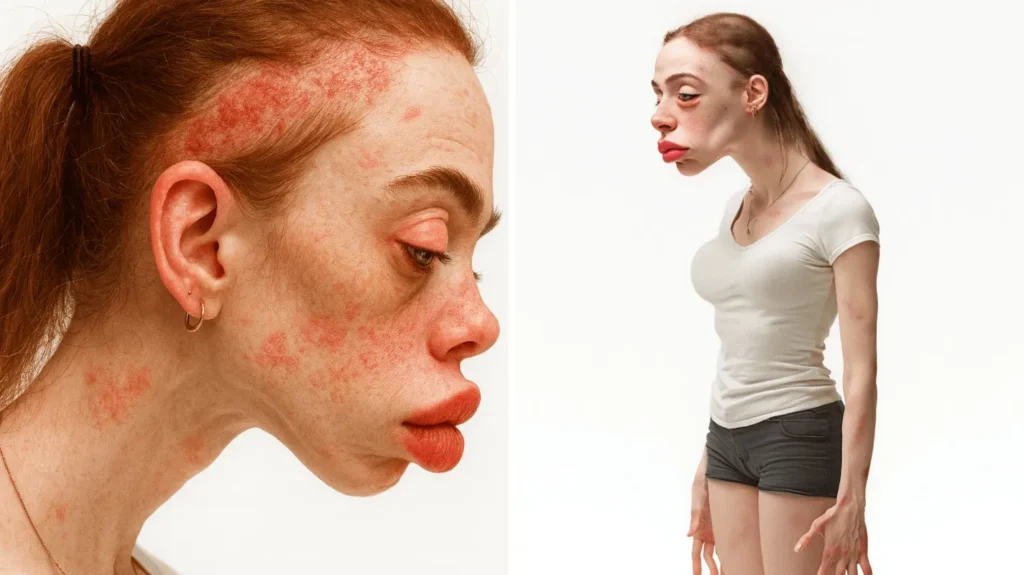
A model created by researchers to predict what habitual social media influencers might look like physically in thirty years has gone viral — and the reaction online has been one of collective unease. The digital simulation, designed to illustrate the cumulative toll of certain lifestyle choices common among content creators, depicts a figure with dramatically altered posture, skin, and eyesight. But beyond the shock value, the researchers behind it say there is a genuine public health message at its core, one that is becoming increasingly urgent as more young people aspire to make influencing their full-time career.
What Does the 2050 Model Actually Show?
The model, shared millions of times across social media platforms, depicts a humanoid figure with a hunched spine, permanently strained eyes, a complexion marked by sun damage and screen exposure, and enlarged thumbs from years of repetitive scrolling and tapping. The researchers who commissioned the simulation — drawing on data from physiotherapists, dermatologists, opticians, and sleep scientists — say the image is not meant to be alarmist but to make abstract health risks tangible. Seeing the physical consequences rendered visually, they argue, is far more effective than reading statistics.
The Science Behind the Predictions
The specific conditions shown in the model are grounded in real medical data. Prolonged screen use is already documented as a contributor to digital eye strain, dry eye syndrome, and accelerated myopia progression. Poor posture while filming or scrolling correlates with a condition sometimes called tech neck, a curvature of the upper spine that physiotherapists are seeing in patients at increasingly young ages. Skin damage from ring-light exposure and insufficient sunscreen use is a documented concern among dermatologists who work with content creators. The model accelerates these trends to their logical endpoint over three decades.
Sleep Deprivation and the Always-On Culture
One of the most striking features in the 2050 model is the representation of chronic sleep deprivation — visible in the simulation through exaggerated under-eye pigmentation and facial tension. Sleep scientists consulted during the project noted that many professional influencers, particularly those who monetise across global time zones, regularly operate on fractured sleep schedules. The blue light emitted by screens suppresses melatonin production, making deep restorative sleep harder even when the opportunity arises. Over decades, the health consequences of persistent sleep disruption are severe and wide-ranging.
Researchers say Unrealistic beauty standards might alter future faces. A new model predicts what influencers could look like by 2050 if current trends continue, warning of premature aging, bone structure changes,extreme body distortions. Health &social costs of digital perfection pic.twitter.com/vdalTYKuxm
— Saima Khan (@cymakhan0) September 26, 2025
Mental Health: The Invisible Layer
While the physical model captured headlines, the researchers were equally keen to highlight the psychological dimension of a life spent performing online. The constant pressure to maintain engagement metrics, manage public perception, and respond to criticism in real time creates a state of chronic low-level stress linked to elevated cortisol levels and heightened risk of anxiety and burnout. Several prominent influencers have spoken publicly about mental health crises in recent years, and the researchers argue these individual stories point to a systemic pattern the industry has been slow to address.
Young People Are Watching and Aspiring
Part of what makes this research significant is the demographic context in which it lands. Survey after survey has found that influencer or content creator ranks consistently near the top of career aspirations among children and teenagers in the United Kingdom. The appeal is understandable — the image of a young person earning a substantial income from sharing their passions is enormously seductive. What is far less visible to aspiring creators is the physical and psychological cost that sustained success in that industry appears to extract over time.
Influencers have been warned to look after their health, after researchers illustrated what the average one might look like come the year 2050🫨 #influencers #socialmedia #beautystandards #future #warning #TMS7 – Straight after Sunrise, weekdays on Channel 7 and 7Plus pic.twitter.com/JvjmU7NtxZ
— The Morning Show (@morningshowon7) September 4, 2025
The Industry Response Has Been Muted
The response from established influencers and the platforms that profit from their content has been largely defensive. Several high-profile creators pushed back on the model online, describing it as fearmongering or suggesting it unfairly demonises a legitimate profession. Platform representatives pointed to existing wellbeing features and policies around working hours for child creators. Critics argue that the platforms have a financial incentive to minimise concern about the long-term costs of content creation, given that the entire business model depends on a constant supply of people willing to live it.
What Experts Are Actually Recommending
Researchers were careful to note that the risks depicted in the model are largely preventable with appropriate adjustments to working habits. Regular screen breaks using the twenty-twenty-twenty rule significantly reduce eye strain. Ergonomic workstation setups and regular movement breaks address the postural risks. Establishing strict boundaries around working hours, particularly those involving screen use in the two hours before sleep, mitigates the most serious sleep disruption effects. None of these interventions are especially complex — they simply require treating content production as work subject to occupational health standards.
A Wider Conversation About Digital Work
The 2050 influencer model has sparked a broader conversation about the health implications of digital work generally — not just for professional creators but for the millions of people who spend the majority of their working and leisure hours in front of screens. Office workers, remote employees, and students face many of the same physical risks as influencers, albeit typically without the additional pressure of public performance and audience management. Some occupational health experts have seized on the moment to argue for updated workplace health guidance that reflects the realities of a screen-dominated working life.
The disturbing 2050 model will likely fade from the news cycle within days, as viral content always does. But the health questions it raises are not going anywhere. As the influencer economy continues to grow and more young people orient their ambitions around a life online, the gap between the aspirational image of content creation and its documented physical and psychological costs becomes an increasingly pressing public health concern. The researchers behind the model say that was always the point — not to frighten people off social media, but to make sure they go into it with their eyes genuinely open.

Written by
Elle Diaz
Elle Diaz is a freelance journalist and fitness model based in the UK. With a background in health, wellness, and popular culture, she covers the stories people are actually talking about — from viral trends and celebrity news to science, lifestyle, and human interest. Elle brings a sharp, relatable voice to every piece she writes.
📷 Follow on Instagram