
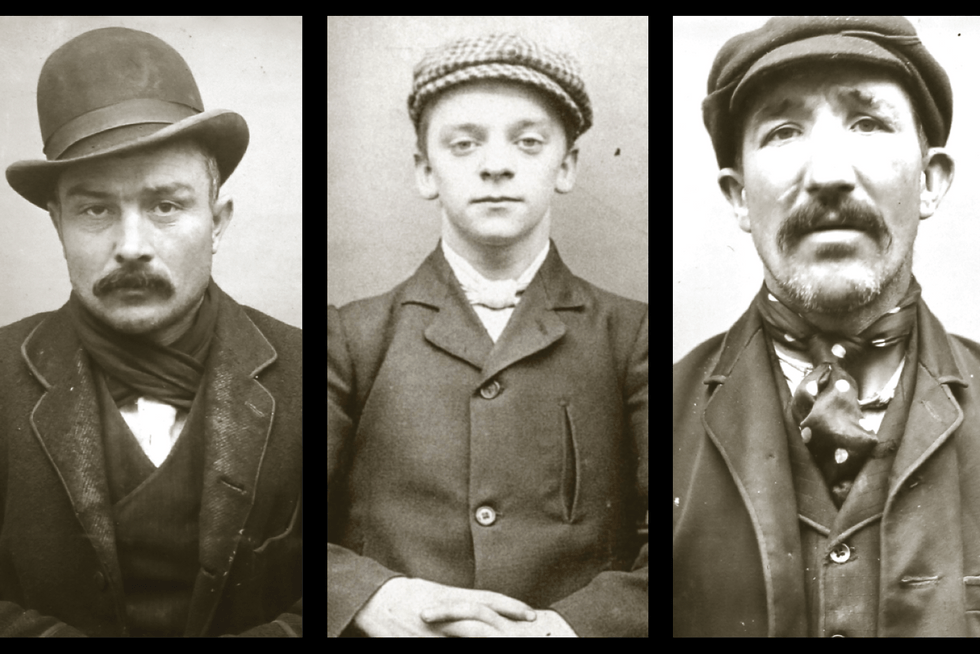
The hit BBC television series made the Peaky Blinders household names around the world, turning a gang of Birmingham street criminals into stylish anti-heroes dressed in fine suits and razor-sharp caps. But the real Peaky Blinders were far removed from the glamorous figures portrayed on screen. Their story is one of grinding poverty, brutal violence, and desperate survival in one of Victorian England’s most deprived industrial cities. The truth is uncomfortable, and it challenges everything the drama has led us to believe.
Who Were The Real Peaky Blinders?
The Peaky Blinders were a genuine street gang that operated in Birmingham, England, primarily during the 1890s and early 1900s. Unlike the fictionalised Shelby family of the television show, who are portrayed as wartime heroes turned criminal masterminds, the real gang were predominantly young working-class men from the Cheapside and Small Heath districts of the city. They were not romanticised outlaws but thugs who preyed upon their own communities, terrorising local residents, attacking rivals, and running illegal gambling operations from the dimly lit back-street courts of industrial Birmingham.
How Did They Get Their Name?
The origin of the name Peaky Blinders is a subject of genuine historical debate. The most popular theory, widely repeated in pop culture, is that gang members sewed razor blades into the peaks of their flat caps and used them as weapons to blind enemies. However, historians have pointed out that razor blades were not yet cheap or widely available during the gang’s most active years in the 1890s. A far more likely explanation is that the word “peaky” simply referred to the peaked cap itself, a signature item of working-class male fashion, while “blinders” was Victorian slang for something considered flashy or outstanding in appearance.
The Birmingham Streets They Controlled
The gang’s territory was centred on the back-to-back terraced streets of Birmingham’s industrial heartland, particularly the areas around Cheapside, Adderley Street, and Small Heath. These were among the most overcrowded and poverty-stricken neighbourhoods in Britain, packed with poorly paid factory workers, labourers, and their families living in cramped and unsanitary conditions. The Peaky Blinders thrived in this environment of economic desperation, using fear and violence to extract money from local bookmakers, shopkeepers, and ordinary residents who had little recourse to police protection in those years.
Who were the real Peaky Blinders? What part did they play in the Black Country after the First World War? Hear bestselling social historian Professor Carl Chinn’s family story of his own great-grandfather – a Peaky Blinder. 📅 Tue 17 Sept #GlosHistFest24 https://t.co/dPftModqcN pic.twitter.com/csI3fup8yp
— Gloucester History Festival (@GlosHistFest) August 12, 2024
Their Methods Of Crime And Violence
The gang’s criminal activities were far less sophisticated than those depicted in the television series. Rather than running international smuggling operations or manoeuvring in the corridors of political power, the real Peaky Blinders were involved in street robbery, assault, illegal bookmaking, and pitch-and-toss gambling rings. Violence was their primary tool, and gang fights were frequent and ferocious. Weapons included belt buckles, heavy boots, bricks, and whatever else came readily to hand. Attacks on rival gang members or those who crossed the Blinders could leave victims permanently disfigured or worse.
The Key Figures Behind The Gang
Several real individuals have been identified as prominent Peaky Blinders members through surviving court records and contemporary newspaper reports. Thomas Gilbert and his close associates were among the most notorious, regularly appearing before Birmingham magistrates on charges of assault, affray, and public disorder. Billy Kimber, a significant figure in the gang’s later years, became associated with the broader Birmingham Gang that continued criminal operations well into the 1920s. None of these individuals bore much resemblance to the brooding, calculating Thomas Shelby of the television drama. They were street-level thugs, not strategic criminal masterminds.
What The TV Show Gets Wrong
While the television series deserves credit for bringing attention to a largely forgotten chapter of British history, it takes considerable liberties with the truth. The real gang was active primarily in the 1890s, not the post-First World War 1920s setting of the show. The Shelby family is entirely fictional. The gang’s involvement in national politics, international arms dealing, and high-society intrigue is pure invention designed to serve dramatic purposes. Perhaps most significantly, the stylised glamour of the screen version bears little relation to the grinding poverty and squalor that produced and sustained the actual Peaky Blinders during their violent heyday.
The Police’s Struggle To Stop Them
Birmingham’s Victorian police force found the Peaky Blinders remarkably difficult to suppress. Witnesses were routinely reluctant to testify against gang members for fear of brutal reprisals, and the close-knit communities in which the gang operated provided a significant degree of protection from outside interference. When members were arrested and convicted, sentences were often relatively light by modern standards, and the gang simply continued its operations upon their release. The revolving door of the criminal justice system of the era allowed the Blinders to persist for years despite repeated police crackdowns and public complaints about their behaviour.
How The Gang Finally Fell Apart
The original Peaky Blinders did not end with a dramatic confrontation or a moment of high-stakes reckoning. They simply faded as social conditions gradually changed in Birmingham during the early twentieth century. Urban redevelopment broke up the tightly packed slum courts where the gang had flourished and recruited its members. Economic conditions slowly improved for working-class families. Rival criminal organisations emerged and absorbed former members into new structures. The First World War drew many young men away from the streets entirely. By the 1920s, the Peaky Blinders name was already becoming more of a historical memory than a living threat.
The real Peaky Blinders who operated in Birmingham in the early 1900s. Pictured from left to right are Henry Fowler, Ernest Bayles, Stephen McHickie and Thomas Gilbert. pic.twitter.com/NK7OobOdCq
— Historic Vids (@historyinmemes) November 8, 2022
Why Their Legend Lives On Today
The enduring fascination with the Peaky Blinders speaks to something deeper than mere nostalgia for criminal history. Their story touches on universal themes of poverty, ambition, community loyalty, and survival in the face of overwhelming odds. Birmingham has embraced its complicated heritage in recent years, with heritage tours, museum exhibitions, and cultural events celebrating the history behind the legend. The television series, whatever its historical liberties, has undeniably sparked genuine and widespread interest in the city’s Victorian past and the real people who lived and suffered through those difficult years.
The true story of the Peaky Blinders is ultimately a story about what poverty and desperation can produce in any society. They were products of their time and their place, young men with very few options who chose violence and crime over the grinding misery of factory work and slum life. The television show has transformed them into global icons, but behind all the mythology lies a much darker and much more human story that says something genuinely uncomfortable about the social conditions that made them possible in the first place.

Written by
Elle Diaz
Elle Diaz is a freelance journalist and fitness model based in the UK. With a background in health, wellness, and popular culture, she covers the stories people are actually talking about — from viral trends and celebrity news to science, lifestyle, and human interest. Elle brings a sharp, relatable voice to every piece she writes.
📷 Follow on Instagram